


If there may be one factor the British monarchy excels at, it’s the phantasm of everlasting Britishness. The crowns keep polished, the speeches keep mild, and the castles keep photogenic. However the royal household itself? That’s a special story. As a result of the Windsors — the quintessentially British Windsors — was once so German that Oktoberfest would possibly as nicely have been a royal household reunion.And nothing makes this irony sharper than the trendy Britain–Germany camaraderie you see at state banquets, the place chandeliers glow, orchestras play, and royal dialog politely avoids mentioning that the household tree as soon as spoke flawless Excessive German. So let’s dive in.As soon as upon a time, they have been the Home of Saxe-Coburg and GothaThe Windsors weren’t at all times Windsors. Their authentic title was the extraordinarily German Saxe-Coburg and Gotha, a dynastic title straight out of a Wagner opera. It began with Queen Victoria, whose mom was German, and whose beloved Prince Albert was so totally German that he virtually radiated orderliness and environment friendly Christmas tree placement. The Victorian period would possibly really feel like a golden age of Britishness now, however genealogically, it was as German as pretzels and philosophy.When Victoria died in 1901, her son Edward VII inherited the throne — and the German surname. However the actual plot twist arrived together with his son.
King George V: the king who rebranded the monarchy
George V inherited a rustic at warfare with Germany. Londoners have been smashing sauerkraut barrels, dachshunds have been being renamed “liberty hounds,” and a royal household with a German surname was not the vibe.Cue 1917: The best royal PR transfer in historical past. With one proclamation, George V dumped Saxe-Coburg and Gotha and adopted a reputation so aggressively British it might have worn tweed: Windsor.Impressed by Windsor Fort, it sounded historic, noble and patriotic — regardless of being model new. The ink dried on the paperwork, the palace letterheads have been destroyed, and Britain exhaled in reduction. The monarchy was now formally British… no less than on paper.
However the German roots didn’t magically vanish
The rebrand was sensible, however the family tree? Nonetheless very German.Some highlights: Prince Philip, Queen Elizabeth II’s husband, was born into the Greek royal household however descended from German homes with names that might fill three pages of a passport.Queen Mary, spouse of George V, was born Mary of Teck — one other German department. Charles III descends from a dense net of German royals stretching throughout Bavaria, Hanover, Hesse and extra. In the event you printed the household tree and colour-coded the German connections, Buckingham Palace would glow a wholesome bratwurst shade. Even immediately, royal DNA is principally a European buffet.
The irony of recent royal diplomacy
At this time, when British monarchs host German leaders with heat speeches about shared values, defence cooperation, and European unity, historical past quietly smiles. The royal household, as soon as so German it needed to rename itself to outlive, now performs host with the arrogance of a dynasty that has absolutely assimilated — but by no means absolutely forgotten its origins.You’ll be able to image the scene: chandeliers twinkling, musicians taking part in, German visitors mingling with British aristocrats, and a monarch whose ancestors as soon as got here from the very lands his visitors symbolize.If there have been ever a second for historical past to wink, that is it.
How German have been the Windsors?
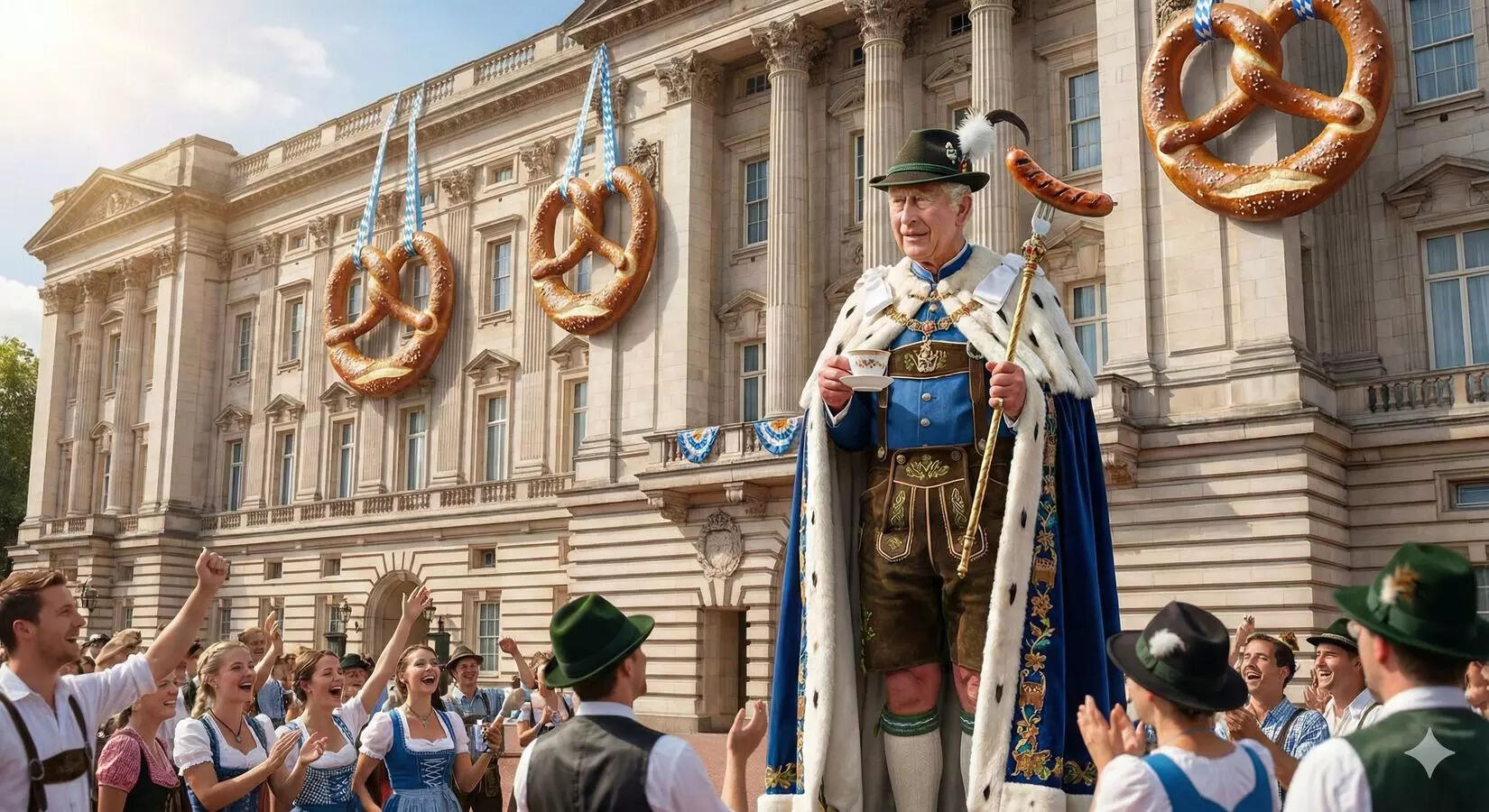
On a scale from 1 to schnitzel: a agency bratwurst-with-sauerkraut.Their authentic home — Saxe-Coburg and Gotha — was authentically, unmistakably German. Even the Christmas tree custom Britain loves so dearly was imported straight by Prince Albert. Victorian Christmas? Principally a festive German cultural takeover wrapped in tinsel.Throughout World Struggle I, anti-German sentiment turned so robust that the press overtly questioned whether or not the monarchy was too German to rule. The rebrand to Windsor wasn’t simply beauty — it was survival.
Windsor immediately: British by title, European by blood
At this time the Windsors stand as a logo of British stability. They sip tea, wave from balconies, and look as if their roots stretch again to Roman Britain. However behind the curated iconography is a household assembled by centuries of intermarriage throughout Europe.Britishness, of their case, is extra costume than chromosome. And that’s precisely why their historical past is so deliciously ironic.In conclusion: the Windsors are Britain’s most profitable German importBavarian beer is nice, German engineering is known, however probably the most profitable German export to the UK was the British royal household itself.A dynasty that started with a German prince and a half-German queen reinvented itself with one stroke of promoting genius — and have become the very embodiment of British id. They would be the Windsors now, however their roots stretch deep into the forests of central Europe. Lengthy stay the British monarchy. Or within the authentic tongue: Lang lebe die Windsors.


